SSC CGL 2026 Tier I · 7 Oct 2026, Shift 3 question paper with solutions
The SSC CGL 2026 Tier I paper held on 7 October 2026, Shift 3. Below are 10 of its 100 questions with answers and solutions. Attempt the full paper with a real exam timer, detailed analysis and an all-India rank on ExamEdge.
Exam date
7 October 2026, Shift 3
Questions
100
Marks
200
Time
60 min
Negative marking
−0.5 per wrong
Language
English
Paper pattern
General Intelligence and Reasoning
25 Q · 50 marks
General Awareness
25 Q · 50 marks
Quantitative Aptitude
25 Q · 50 marks
English Comprehension
25 Q · 50 marks
Source: Staff Selection Commission.
Sample questions with answers (10 of 100)
Q1 · General Intelligence and Reasoning · Cube and Dice (Unfolded Cube)
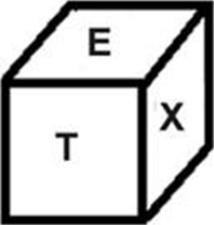
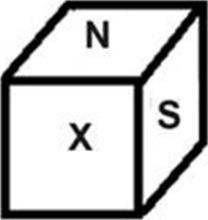
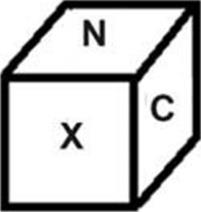
Which of the following cubes in the answer figure can be made based on the unfolded cube in the question figure?

A
B
C
D
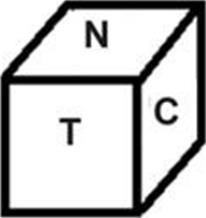
Answer: D
Solution
Net: E–C–T in a row, with N–X–S below starting under T.
• In a straight row of three, the 1st and 3rd faces are opposite: E↔T and N↔S.
• The remaining pair is opposite: C↔X.
(a) shows E and T together, (b) shows N and S together, (c) shows X and C together – all impossible.
(d) shows N, T, C – no two of them are opposite, so it can be formed.
Answer: Option (d)
Q2 · General Awareness · Ancient History (Gupta Empire)
Who authored the famous Prayaga Prashasti praising Samudragupta's achievements?
A
Harisena
B
Kalidasa
C
Aryabhata
D
Faxian
Answer: A
Solution
The Prayaga Prashasti (Allahabad Pillar Inscription) was composed in Sanskrit by Harisena, court poet of Samudragupta.
• Kalidasa was a poet of Chandragupta II's period, Aryabhata an astronomer, and Faxian a Chinese pilgrim.
Answer: Harisena
Q3 · Quantitative Aptitude · Mensuration (Sphere)
A solid metallic sphere of radius 3 cm is melted and recast into three smaller spherical balls. The radii of two of these balls are 2 cm and 1.5 cm, respectively. What is the surface area of the third ball?
A
33π cm²
B
45π cm²
C
35π cm²
D
25π cm²
Answer: D
Solution
Volume is conserved, so r³ values add: 3³ = 2³ + 1.5³ + r³
• 27 = 8 + 3.375 + r³ → r³ = 15.625 → r = 2.5 cm
• Surface area = 4πr² = 4π × 6.25 = 25π cm²
Answer: 25π cm²
Q4 · English Comprehension · Cloze Test (Tenses)
In the following question, a sentence with a blank is given, followed by five words labeled (1), (2), (3), (4), and (5). Choose the word that fills the blank appropriately in the context of the passage. In the modern zeitgeist, the ascendancy of technology (1) ____ an aura of inexorability, fostering the notion that human agency is increasingly subordinate to algorithmic architectures. Proponents of technological determinism posit that innovation unfolds according to an autonomous trajectory, largely immune to ethical, cultural, or political intervention. This perspective, however, often (2) ____ the complexity of human intentionality, reducing societies to passive recipients of innovation rather than active co-creators. Conversely, advocates for humanistic autonomy assert that technology's deployment is invariably mediated through socio-political frameworks, reflecting collective choices rather than immutable laws of progress. The crux of the debate hinges upon whether innovation possesses an inherent teleology or whether it is a malleable construct subject to deliberate modulation. Indeed, to view technological development as (3) *ineluctable* is to diminish the scope of human volition. Moreover, the asymmetry of technological access across socio-economic strata complicates the deterministic narrative, suggesting that technologies evolve not merely through technical ingenuity but through contested arenas of power, privilege, and ideology. As artificial intelligence, genetic engineering, and quantum computing advance, the ethical imperative to assert governance and restraint (4) ____ ever more salient. In the absence of such stewardship, humanity risks enacting a form of (5) *autopoiesis*, wherein systems self-perpetuate without conscious human oversight or ethical anchoring. Thus, the resolution of this tension will critically influence not merely the architecture of future technologies but the very ontology of what it means to be human. Choose correct tense. (1)
A
has conferred
B
had conferred
C
confers
D
was conferring
Answer: A
Solution
The passage describes a situation that began in the past and continues now ('In the modern zeitgeist… fostering the notion…'), so the present perfect 'has conferred' fits.
• 'had conferred' (past perfect) and 'was conferring' (past continuous) wrongly shift the time to the past.
Answer: has conferred
Q5 · General Intelligence and Reasoning · Coding-Decoding (State Codes)
If in an examination the centre codes and roll numbers are decided by the initial of States/UT followed by digits in a particular pattern like MH10967 for Maharashtra, then Which one of the following codes indicates a roll number from the Southern Region?
A
TN10432
B
RJ10987
C
PB20514
D
HP10954
Answer: A
Solution
The letters stand for the State: TN = Tamil Nadu, RJ = Rajasthan, PB = Punjab, HP = Himachal Pradesh.
• Only Tamil Nadu lies in the Southern Region; the others are in the North/North-West.
Answer: TN10432
Q6 · General Awareness · Medieval History (Lodi Dynasty)
What is the correct chronological sequence of the Afghan (Lodi) rulers on the throne of Delhi?
A
Sikandar Shah—Ibrahim Lodi—Bahlul Khan Lodi
B
Sikandar Shah—Bahlul Khan Lodi—Ibrahim Lodi
C
Bahlul Khan Lodi—Sikandar Shah—Ibrahim Lodi
D
Bahlul Khan Lodi—Ibrahim Lodi—Sikandar Shah
Answer: C
Solution
Bahlul Lodi founded the dynasty (1451–1489), followed by his son Sikandar Lodi (1489–1517) and then Ibrahim Lodi (1517–1526), who lost to Babur at Panipat in 1526.
Answer: Bahlul Khan Lodi—Sikandar Shah—Ibrahim Lodi
Q7 · Quantitative Aptitude · Mensuration (Right Triangle)
The perimeter of a right-angled triangle is 60 cm, and its hypotenuse is 25 cm. What is its area?
A
160 cm²
B
150 cm²
C
80 cm²
D
140 cm²
Answer: B
Solution
Other two sides: a + b = 60 − 25 = 35, and a² + b² = 625.
• 2ab = 35² − 625 = 1225 − 625 = 600 → ab = 300
• Area = ½ab = 150 cm² (sides 15, 20, 25)
Answer: 150 cm²
Q8 · English Comprehension · Cloze Test (Subject-Verb Agreement)
In the following question, a sentence with a blank is given, followed by five words labeled (1), (2), (3), (4), and (5). Choose the word that fills the blank appropriately in the context of the passage. In the modern zeitgeist, the ascendancy of technology (1) ____ an aura of inexorability, fostering the notion that human agency is increasingly subordinate to algorithmic architectures. Proponents of technological determinism posit that innovation unfolds according to an autonomous trajectory, largely immune to ethical, cultural, or political intervention. This perspective, however, often (2) ____ the complexity of human intentionality, reducing societies to passive recipients of innovation rather than active co-creators. Conversely, advocates for humanistic autonomy assert that technology's deployment is invariably mediated through socio-political frameworks, reflecting collective choices rather than immutable laws of progress. The crux of the debate hinges upon whether innovation possesses an inherent teleology or whether it is a malleable construct subject to deliberate modulation. Indeed, to view technological development as (3) *ineluctable* is to diminish the scope of human volition. Moreover, the asymmetry of technological access across socio-economic strata complicates the deterministic narrative, suggesting that technologies evolve not merely through technical ingenuity but through contested arenas of power, privilege, and ideology. As artificial intelligence, genetic engineering, and quantum computing advance, the ethical imperative to assert governance and restraint (4) ____ ever more salient. In the absence of such stewardship, humanity risks enacting a form of (5) *autopoiesis*, wherein systems self-perpetuate without conscious human oversight or ethical anchoring. Thus, the resolution of this tension will critically influence not merely the architecture of future technologies but the very ontology of what it means to be human. Choose correct verb form. (2)
A
obscures
B
obscure
C
obscuring
D
obscured
Answer: A
Solution
The subject 'This perspective' is singular and the passage is in the simple present ('often … reducing societies'), so the singular present verb 'obscures' is needed.
• 'obscure' is plural, 'obscuring' is not a finite verb, 'obscured' breaks the present tense.
Answer: obscures
Q9 · General Intelligence and Reasoning · Odd One Out (Classification)
Find the odd one out. India, China, Brazil, Tokyo
A
India
B
Brazil
C
Tokyo
D
Canada
Answer: C
Solution
India, China and Brazil are countries; Tokyo is a city (capital of Japan).
• Canada is also a country, so it is not the odd one.
Answer: Tokyo
Q10 · General Awareness · Ancient History (Buddhist Councils)
Which Buddhist council was held during the rule of King Kalashoka, the successor of the Shishunaga dynasty?
A
The first Buddhist council
B
The second Buddhist council
C
The third Buddhist council
D
The fourth Buddhist council
Answer: B
Solution
The Second Buddhist Council was held at Vaishali (c. 383 BCE) under Kalashoka of the Shishunaga dynasty, presided over by Sabakami.
• 1st: Rajagriha (Ajatashatru); 3rd: Pataliputra (Ashoka); 4th: Kashmir (Kanishka).
Answer: The second Buddhist council
90 more questions in this paper
Take the full paper in the real exam interface, then see your score, section-wise analysis, solutions to every question and your all-India rank.
Topics in this paper
Spelling
3 questions
Vocabulary (Homonyms)
2 questions
Counting Figures (Triangles)
2 questions
Geometry (Circles)
2 questions
Simplification (Algebraic Identities)
2 questions
Vocabulary (Word Meaning in Context)
2 questions
Data Interpretation (Pie Chart)
2 questions
Data Interpretation (Bar Graph)
2 questions
Embedded Figures
2 questions
Figure Analogy
2 questions
Cloze Test (Subject-Verb Agreement)
2 questions
Science and Technology (Space)
2 questions
Idioms and Phrases
2 questions
Coding-Decoding (State Codes)
1 question
Coding-Decoding (Letter Positions)
1 question

ExamEdge
Mock tests, previous year papers and analysis for SSC, Banking, Railways, Teaching and Defence exams
Sharma Niwas, Ward No. 04, Ramjanki Mandir Road
Bhawanipur, Adapur Block, Raxaul
Purbi Champaran, Bihar 845301, India
© 2026 ExamEdge. All rights reserved. · Udyam Reg. No. UDYAM-BR-11-0126909
Payments are processed securely by Cashfree Payments
 ExamEdge